When Taking a Salary in Bitcoin Was Considered Crazy
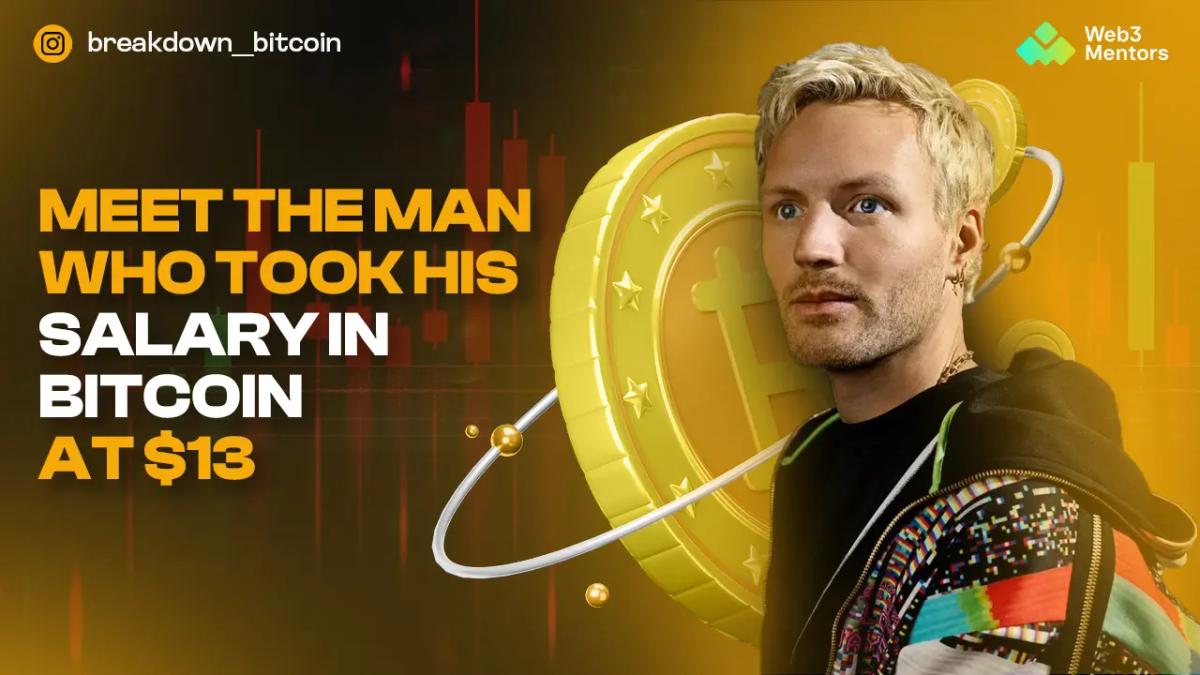
When getting paid in Bitcoin sounded insane
Today, saying you believe in Bitcoin doesn’t raise eyebrows. In the early 2010s, it absolutely did.
Back then, Bitcoin wasn’t a household name. It wasn’t on CNBC. There were no ETFs, no institutional custody solutions, and no billion-dollar market narratives. Bitcoin was experimental software run by a small group of cryptographers, developers, and internet outsiders.
So when Olaf Carlson-Wee decided to take his entire salary in Bitcoin, people didn’t call it visionary. They called it reckless.
At the time, Bitcoin was trading around $13.
A risky decision, not a lucky one
Olaf wasn’t chasing a price chart. He wasn’t trying to time the market. He was working at Coinbase in its earliest days and deeply understood what Bitcoin represented.
He saw Bitcoin as programmable money. Money without permission. Money that didn’t depend on banks, borders, or governments. That belief mattered more to him than short-term price stability.
Instead of converting his salary to dollars, he stayed paid in Bitcoin. Month after month. Through volatility, uncertainty, and long periods where Bitcoin went nowhere.
Most people would have taken profits early. Many would have quit the experiment entirely.
He didn’t.
Enduring the part nobody talks about
Conviction isn’t tested when price goes up. It’s tested when nothing happens or worse, when everything goes against you.
Bitcoin crashed multiple times after Olaf made that decision. It lost more than 80% of its value more than once. Media declared it dead repeatedly. Governments debated banning it. Exchanges failed.
During those years, holding Bitcoin wasn’t fashionable. It was lonely.
But conviction isn’t about being right early. It’s about staying consistent when the outcome is uncertain.
Time, not timing, did the heavy lifting
As Bitcoin matured, adoption grew. Infrastructure improved. More developers joined. More capital entered the ecosystem. What started as an experiment slowly turned into a global monetary network.
Over time, the Bitcoin Olaf earned compounded quietly.
That salary once laughed at, eventually represented tens of millions of dollars. By some estimates, the value crossed the $100 million mark.
Not because he timed the market perfectly.
But because he never tried to.
Why this story matters today
It’s easy to look back and say this was obvious. It wasn’t.
This story isn’t about getting rich from Bitcoin. It’s about understanding something deeply enough to accept uncertainty for years. It’s about aligning your actions with long-term belief, not short-term outcomes.
Most people try to time Bitcoin. Very few try to understand it.
Olaf did the second.
Conviction beats timing
Markets reward patience more often than prediction. Bitcoin especially doesn’t reward people who jump in and out chasing price movements. It rewards those who understand its fundamentals and give the network time to do what it was designed to do.
Conviction doesn’t mean blind faith. It means informed belief, held consistently.
That’s the real lesson behind the headline.
Not everyone should take their salary in Bitcoin. But everyone should understand the difference between timing a market and believing in an idea.
Because in the long run, conviction almost always outlasts timing.
Stay Updated
Subscribe to our newsletter for the latest updates on courses and...